Português Start a project

In use at Nipo CenterSankhya ERP, read-only

Systems built on the ERP your company already runs.

Portals, integrations and AI applied to operations, built on top of your data. Without replacing your ERP, whichever it is, and without putting production at risk.

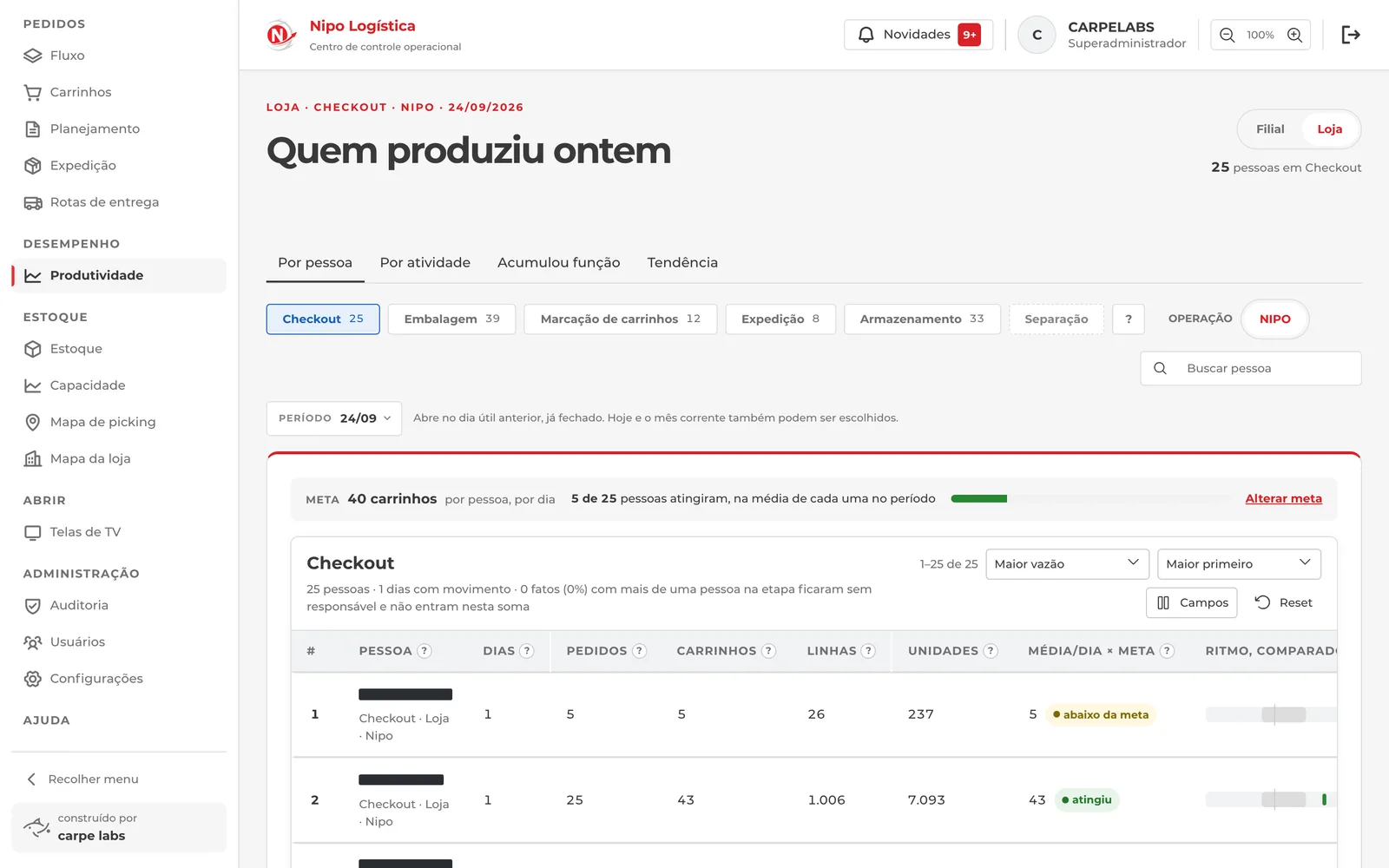
The “Who produced yesterday” screen from Nipo’s logistics dashboard: checkout staff with the day’s orders, carts, lines and units; names redacted.
Nipo Center’s logistics dashboard, in use. Names of people and customers redacted. The screens are in Portuguese.

The Nipo Center case

Nipo Center is an importer based in São Paulo that runs on the Sankhya ERP. Instead of replacing the system, it got portals that read the ERP in read-only mode and give each department the screen it was missing. On top of that data, AI now queries the operation.

AI applied to operations

Works with any AI assistant, with limits and a log of every query.

  • Claude
  • ChatGPT
  • any other AI

queries

Portals and integrations

The screen each department was missing.

  • Logistics
  • Purchasing
  • Photos
  • Tracking

reads, never writes

Your ERP

Whichever it is, it remains the company’s system. Nothing gets replaced.

In the Nipo case, Sankhya.

Logistics dashboard

In production

The main warehouse and the branch follow every order from invoicing to shipping. The same dashboard shows how full each warehouse location is and runs on the operation’s TVs.

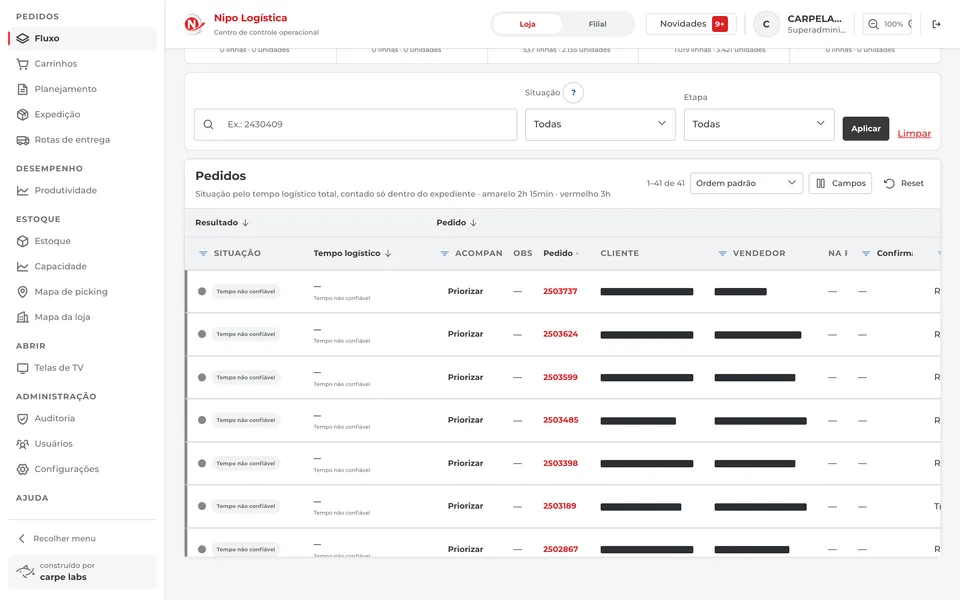
  1. Status by logistics time, counted only within business hours.
  2. What the operation needs to prioritize right now, order by order.
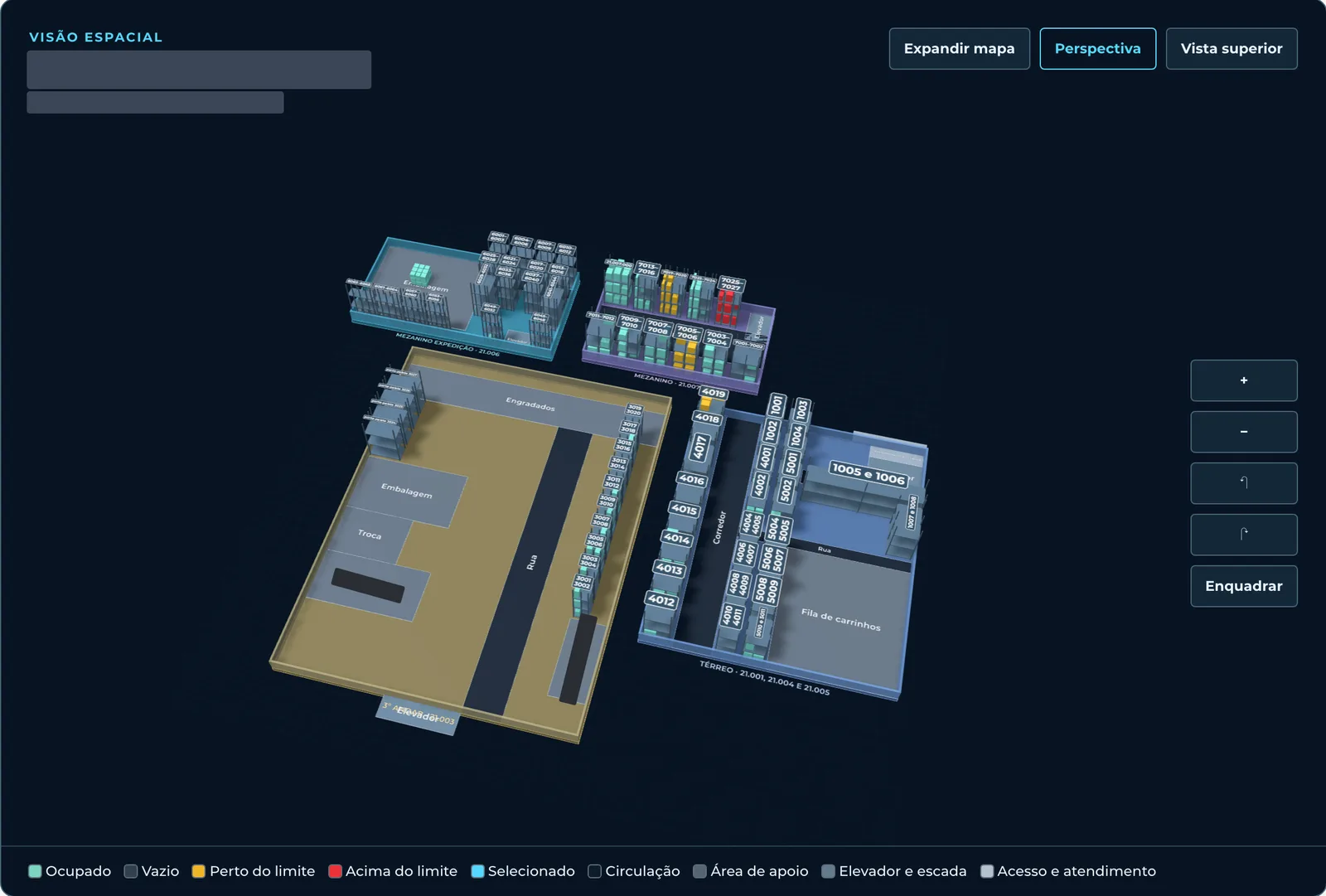
  3. A location over its limit turns red before it becomes a problem.
  4. Every level and every location in the warehouse, right where it is.
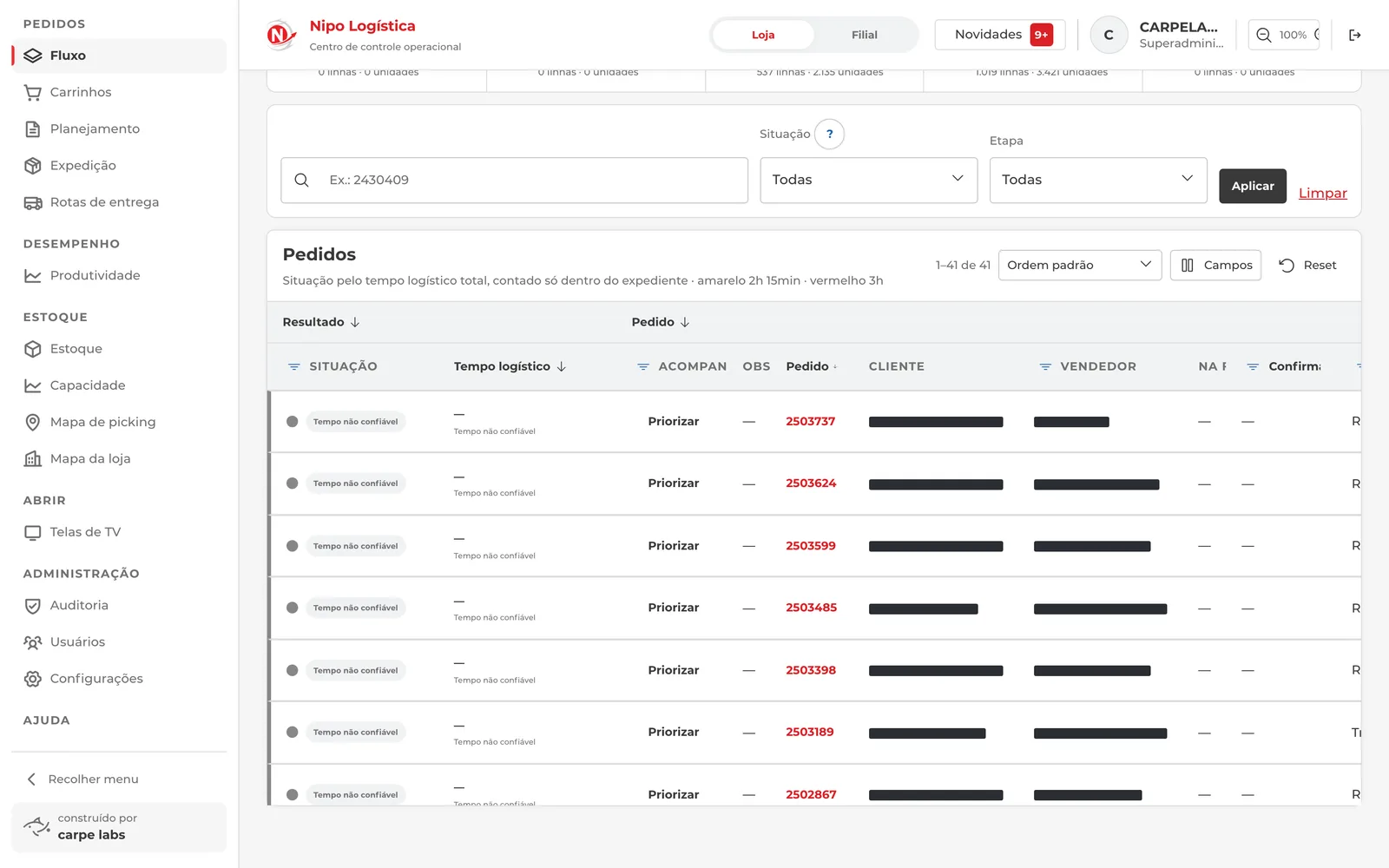
Order table from the logistics dashboard, with the status, stage and number of each order; customer and sales rep names redacted.
Order flow. Customer and sales rep redacted.
Three-dimensional view of the warehouse storage, with levels and locations colored by occupancy.
Storage in 3D, with each location’s occupancy shown by color. Partner redacted.

Purchasing portal

In production

The purchasing team decides on restocking from an analytical mirror of the ERP, by product group and by supplier.

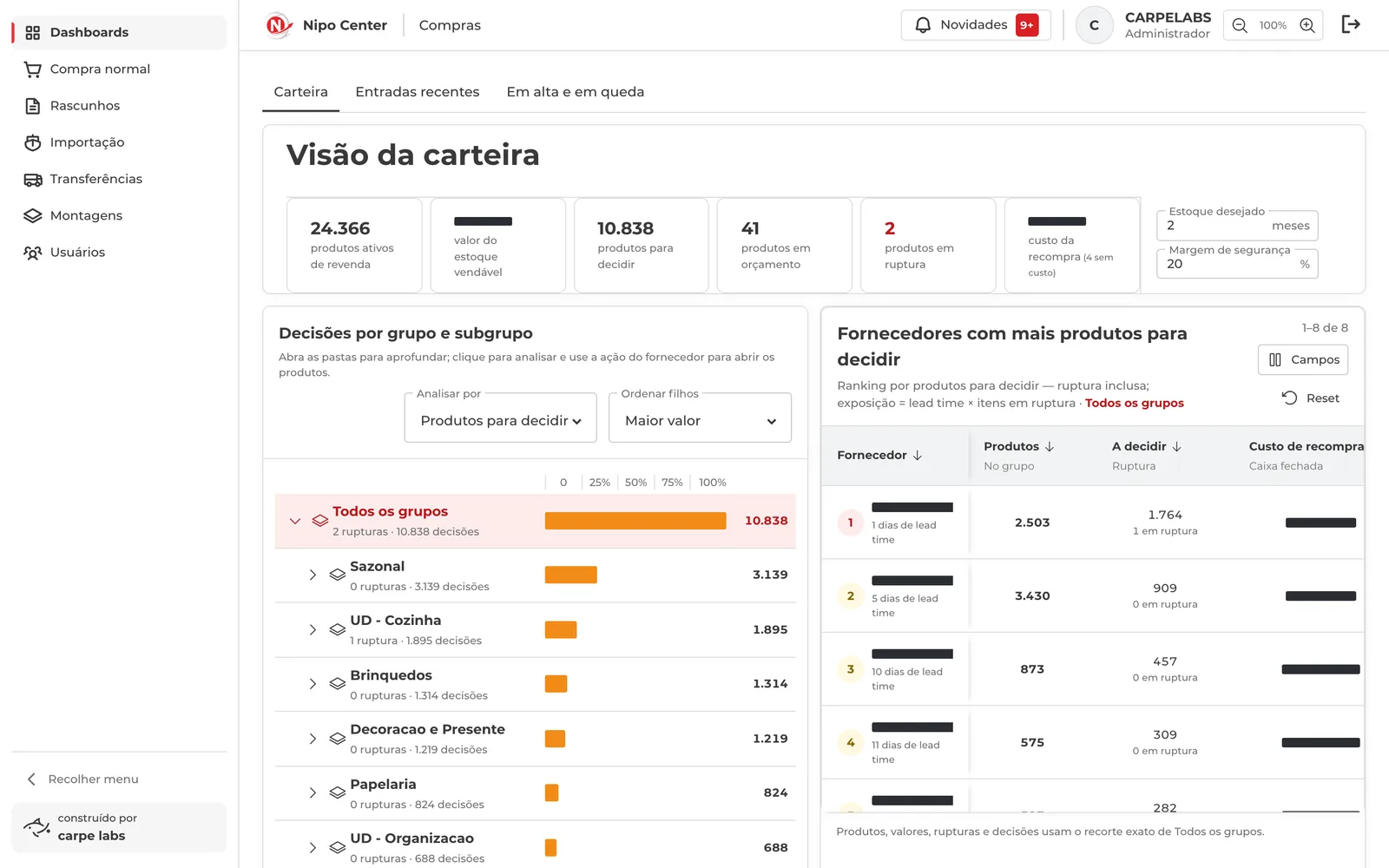
  1. Stockouts highlighted: what is already missing from the shelf.
  2. How many decisions each group and subgroup has ahead.
  3. Suppliers ranked by exposure: lead time × items out of stock.
Portfolio view in the purchasing portal, with products to decide on by group and a supplier ranking; supplier names and amounts in reais redacted.
Portfolio view. Suppliers and amounts redacted.

Also delivered

  • Product photos Upload, analysis and a human decision on the photo of every catalog item. In production
  • Order tracking End customers follow their own order through a link, no login needed. In production
  • Nipo Dados Claude, ChatGPT or any other AI assistant queries the operation’s data, with limits and a log. In acceptance testing
  • Sales rep dashboard Stock, prices and orders in the hands of the people who sell. In acceptance testing
  • WhatsApp support Self-service for customers and a console for support agents. In acceptance testing

How the work is done

The ERP stays the ERP.

The systems read Sankhya in read-only mode, and every new query is measured before it goes to production. Nothing writes to the client’s database without authorization.

Everything goes through acceptance testing.

Every version first runs in a test environment with a copy of the real data. Only after sign-off does it reach the people who use it, with a note on what changed.

AI after the data, not before.

First the data becomes organized and reliable in the portals. Then AI starts querying it, with limits and a log of every query.

Frequently asked questions

Do I need to replace my ERP?

No. The systems are built on top of the ERP the company already uses, and it remains the main system. Nothing is migrated or replaced.

Does it work with any ERP?

Yes. The published case is about Sankhya, but the work starts from the data your ERP already stores, whichever it is. The first conversation defines how that data will be read safely.

Do the systems change data in the ERP?

At Nipo Center, the portals read the ERP in read-only mode, and every new query is measured before it goes to production. Writing to the ERP only happens with explicit authorization.

Where does AI come in?

After the data. First the portals make the data organized and reliable; then AI starts querying it, with limits and a log of every query.

Which AI does it work with?

Any of them. Claude and ChatGPT already query the data in the published case, and other AI assistants come in the same way, with the same limits and the same log.

How does a new version reach users?

Every version first runs in an acceptance environment with a copy of the real data. Only after sign-off does it go to production, with a note on what changed.

Do you work outside São Paulo?

Yes. carpe labs is based in São Paulo, Brazil, and works remotely with companies in any city or state in the country.

How does a project start?

Through the form on this page or by email at contact@carpelabs.io. Tell us what your operation needs and which ERP it runs; the reply goes to the email you provide.

Start a project

Tell us what your operation needs and which ERP it runs. The reply goes to the email you provide.

Prefer email? contact@carpelabs.io

Enter your name.

Enter a valid email.

Describe what you need.